How to start a kettle corn business: costs, day rates, and the fee math
Kettle corn runs 90% margins, but the booth fee is due months ahead. What vendors report earning, charging, and paying at US fairs and markets.

Agustin Garcinuño16 min read
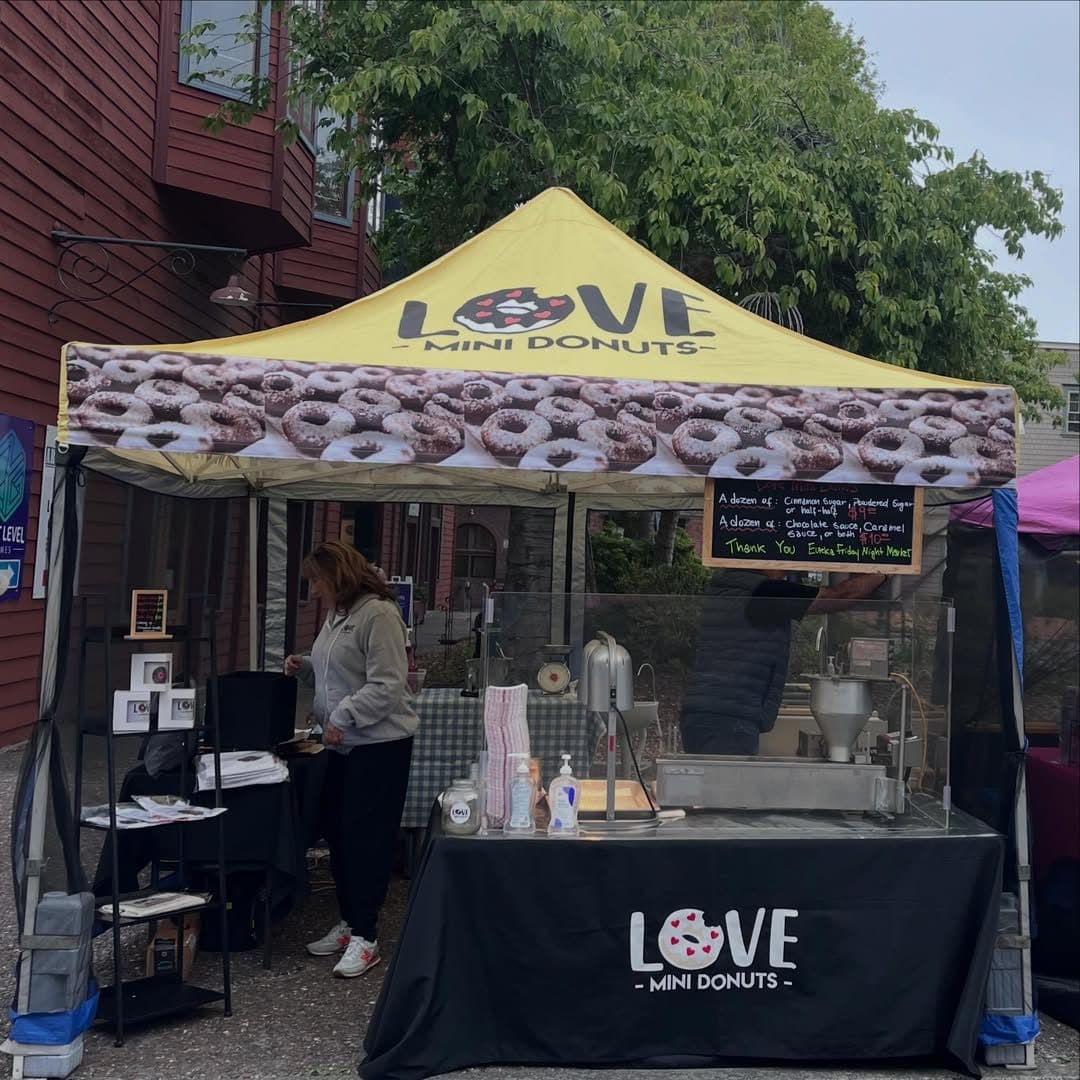
My family has sold mini donuts at Humboldt County fairs, farmers markets, and soccer tournaments since 2011, which means we have set up next to a kettle corn tent more times than I can count. The kettle corn vendor is usually the first booth you smell and one of the last to sell out. They pop in three-minute batches, bag ahead of the rush, and run the whole thing with one or two people. Of the concession neighbours we have had, they are the ones with the smallest ingredient bill and the longest line.
That is also why a 2016 Reddit post asking "why don't more people try selling kettle corn?" still ranks first on Google for the question. The replies from people who did it are the best answer available, and this guide collects them, adds what vendors said on TikTok in 2025 and 2026, a court record with actual daily sales, and the booth fees listed by 1,899 food-vendor events in the Vendorbound catalog. Every number links to its source. If you are weighing kettle corn against a handmade product, our candle business guide covers the other side: no health permit, but a much longer testing period before the first sale.
The short answer
- Starting cost. A commercial kettle and tent setup runs about $4,000 to $6,000. A trailer-based operation with permits, tent, equipment, and inventory ran one vendor about $10,000. You can pop at home under cottage-food law in some states for a few hundred dollars, but that limits you to pre-bagged sales, not popping at events.
- Product cost. Corn, oil, sugar, salt. One farmers-market vendor sold $850 on about $50 of product. A court record puts margins at 90%.
- A good day. $850 at a medium farmers market; $2,000 to $3,000 at a well-attended festival; $2,522 on a farmers-market day that made it into a court transcript. A bad day is $200, or negative if it rains after you paid a $500 non-refundable fee.
- The catch. Fees. Vendors report $500 flat fees, $500 plus 15% of sales, and 20 to 35% of gross at big events. The catalog has 254 percentage-of-sales fee entries; 10% is the most common. Whether to accept a percentage deal is the biggest argument among concession vendors, and this guide lays out both sides.
- The other catch. Kettle corn is "pretty well played out in a lot of areas." Most established events already have a kettle corn vendor. You call, ask, and offer to be the backup.
1. What it costs to start
Three setups vendors describe
| Cottage-food, pre-bagged | Tent and kettle | Trailer | |
|---|---|---|---|
| What you can do | Pop at home, sell sealed bags at markets where your state's cottage law allows | Pop on site under a canopy; the standard fair setup | Pop on site from an enclosed trailer; faster load-in, weather protection |
| Equipment | Stovetop or countertop popper, bags, labels: $200 to $500 | Commercial kettle and burner, propane, sifter, canopy with weights, tables, cash box: $4,000 to $6,000 | Add a trailer and build-out: $10,000 and up |
| Permits | Cottage food registration, labeling | Temporary food facility permit per event, fire permit for propane, liability insurance | Same plus vehicle and NFPA 58 requirements |
| Where it works | Farmers markets, small craft fairs | Everything from farmers markets to state fairs | High-volume festivals and multi-day fairs |
The numbers come from three sources. A ten-year concession-stand owner, advising someone against buying a $26,000 cotton candy truck: "you would be better off with a professional ... machine for about $4000, a good tent for about $2000 and good professional signage and save over $10,000." A former kettle corn employee: "Your total investment will run roughly around $10,000 for licensing, tent, trailer, cooking equipment." And the 2016 thread that still ranks first for this question estimated "a few hundred dollars to a few thousand," which a 2026 reply corrected: "after all the upfront costs involved, which can probably reach upwards of $4000 to get started ... registering your business, getting heath, food, and safety inspection, and then your local vendor bylaw permit."
An Oklahoma vendor's tent walkthrough on TikTok shows what the middle tier looks like in practice: an 80-quart kettle, a custom sifter, a 30-inch by 8-foot serving counter, a register, and a full price menu. The same vendor describes modifying the kettle: relocating the valve, adding an igniter, changing the pivot. Expect to tinker.
What the product costs
Almost nothing, relative to sales. A pizza vendor at the same farmers market counted it up: "The guy at our farmers market was averaging $850 in sales on $50 of product and maybe $60 of fuel last year. That was at a medium market, attendance of maybe 1200 on average." A Washington court record from a farmers-market dispute puts the Humdinger kettle corn stand at "90-percent profit margins."
One batch in a commercial kettle takes about three minutes and fills four or five large bags. Kettle corn keeps one to two weeks sealed, because the sugar coating seals the popcorn, so you can pop ahead and bag before the rush. Plain popcorn goes stale within an hour.
What the booth costs
The Vendorbound catalog lists booth fees for 1,293 of the 1,899 events that accept food vendors. The median listed fee is $145; a quarter are $60 or less, a quarter $335 or more, and 248 fee tiers are free. The 10 events that name kettle corn or popcorn as a category (usually as "single-item food: shave ice, coffee, kettle corn") have a median fee of $170, from $130 to $302 across the middle half.
Those are the flat fees. Section 5 covers the percentage deals.
2. Permits, propane, and the health department
There is no federal permit for concession food. Everything is state and local, and it comes in three pieces.
The health permit
Popping kettle corn at an event is open food preparation, which puts you in the most-regulated tier of temporary food permits. Under the FDA Food Code as adopted by states, a temporary food establishment operates for no more than 14 consecutive days at a single event, and the local health department issues and inspects the permit.
California is the strictest common case. Every food vendor at a permitted community event needs a Temporary Food Facility permit under Health and Safety Code 114387. San Diego County's version for on-site preparation requires a TFF application, a commissary letter of agreement, proof of Food Safety Manager certification, and a three-compartment warewashing sink if the event runs more than four hours including setup. Annual permits exist alongside single-event permits for one to four days. Search "[your county] temporary food facility permit" for the local form; fees and document lists vary by county.
A former kettle corn employee described the practical result: "Everything was setup underneath a tent and the cooking has to be underneath the tent to comply with most food safety requirements." A vendor in her first season put the emotional result on TikTok: "The health department comes today, and I am pooping my pants. I'm so nervous." A six-year vendor's advice: "It's always beneficial to work with the health department, not against them. Be transparent, their job is to smell bullshit daily."
Cottage food, if you pre-bag
Some states let you make kettle corn at home and sell it sealed without a food-facility license. Ohio's cottage food rule lists "popcorn, flavored popcorn, kettle corn, popcorn balls, caramel corn" by name. Kettle corn is shelf-stable and not potentially hazardous, so it qualifies in many states, but the lists differ, labeling rules apply, and cottage rules cover pre-bagged product only. The moment you light a kettle at an event, you are back in the temporary food permit system.
Propane and the fire department
The kettle runs on propane, and propane at a public event brings in the fire authority. The rules are set locally but follow the same national codes, and one Sonoma County propane checklist is representative. It cites California Fire Code chapters 50, 53, and 61 and NFPA 58:
- Cooking booths at least 10 feet apart.
- Propane containers outside the tent enclosure at all times, upright, secured. Five, seven, and 10-gallon tanks nested in a milk crate.
- Hoses routed to avoid trips, and leak-tested with soapy water in front of the inspector. You bring the spray bottle.
- One 2A:10BC (5 lb dry chemical) fire extinguisher minimum, with a current service tag.
- No cylinder storage in vehicles or enclosed structures.
- A separate operational permit may be required for the propane, on top of the event permit. Fire-code permits trigger at 50 or more attendees or tents over 400 square feet.
A vendor on r/foodtrucks: "depending on your jurisdiction, propane powered set ups can have some hoops to jump through." The kettle also rules out indoor events: "you would set off a smoke detector with this thing pretty easily."
Insurance
No law requires liability insurance. Event organizers do: "often required if you participate in any events." A kettle corn liability that came up specifically: "I've heard of more than one person chipping a tooth on kettle corn unpopped kernels and causing the owners grief." Sift well.
3. What a day pays
Documented days
| Setting | Sales | Source |
|---|---|---|
| Medium farmers market, ~1,200 attendance, weekly | $850 average, on $50 product and $60 fuel | r/Entrepreneur |
| Vancouver WA farmers market, entrance spot for years | best days over $2,000; $2,522 on the day in dispute | court testimony |
| Well-attended festival, good weather | "sales can exceed $3,000"; $1,000+ profit after booth, product, tax, transport, insurance | r/Entrepreneur |
| In front of a grocery store | "$200+ profit a day" | same thread, cited as the floor, not the ceiling |
| Tempe Arizona art festival, two days | three to four sales a minute; profit paid back the $10,000 startup | r/foodtrucks |
| Sycamore IL car and steam show | 1,000 bags prepared | TikTok, Aug 2026 |
| Cotton candy at a DJ'd event (comparable concession) | about $200; best day over $600 | r/smallbusiness |
One vendor on TikTok says she "made over $70,000 our first year." The clip does not say how many events that took; treat it as an upper bound someone reached, not an expectation.
The bad days
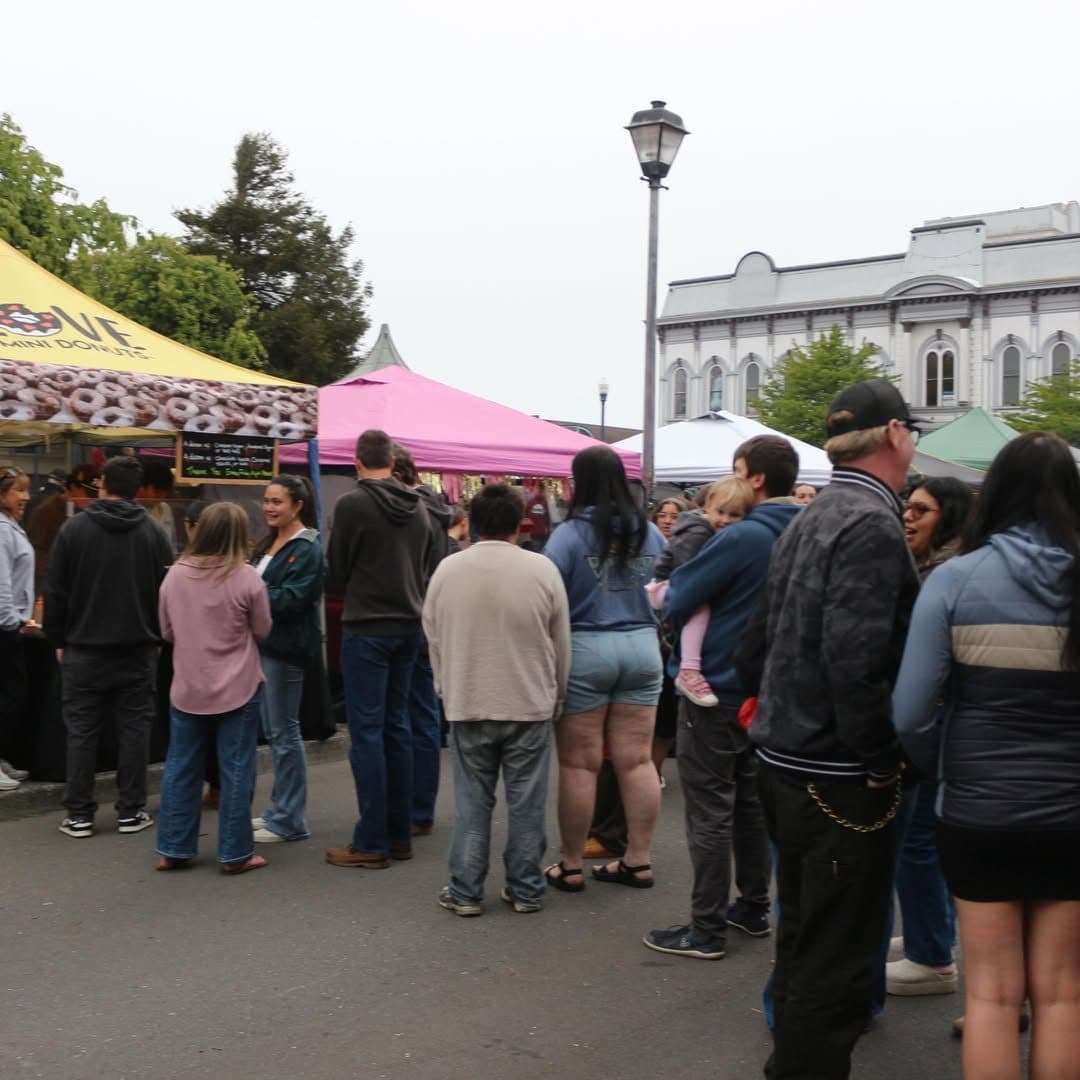
The concession operator who described $3,000 days also described the other kind: "During a cold/ rainy event you are going to lose. This really sucks if you paid $500 or more for a space (which is paid weeks or months in advance and is non-refundable)." A canopy vendor: "A rained out event is a level of heartbreak you can't put into words. Packing up in the rain, soaked, cold, negative money and wasted product is something else. It's like a 10 hour slow death as you watch your potential profits piss down the drain."
And the days are long. A Virginia popcorn truck's event day on TikTok: arrive 10:14 am, set up by 10:53, rush line at 4:08 pm, wrap at 7:13 pm. The most-upvoted reply in the 2016 thread: "So best case scenario, you make $200 profit per day in a very manual labor job. Congratulations, you traded your boring day job in the office for days sitting in a cramped trailer cooking kettle corn for 12 hours." The reply to that had almost as many votes: "Why don't you scale up your best case scenario?"
What decides it
A ten-year concession owner: "At the end of the day with concessions it is getting into the right events with crowds a good spot and little competition. There is a lot of politics involved, if you get into the right event it doesn't really matter what you sell you will make money and same thing vice versus."
The Vancouver court case is the same lesson at trial length. The vendors had the entrance spot for years, were moved when the market decided produce should greet shoppers ("It's a farmer's market, not a carnival"), made $2,522 at the new spot anyway, complained, and were evicted 9 to 0 by the board. Another kettle corn vendor took their place the next week.
4. Pricing
What vendors charge
| Item | Price | Source |
|---|---|---|
| Kettle corn, three sizes | $5 / $6 / $8 | r/foodtrucks, 2020 |
| Classic kettle corn, three sizes | $5 / $8 / $11 | Oklahoma tent, 2026 |
| Flavored (caramel, cheddar, Chicago style), three sizes | $6 / $9 / $12 | same |
| Kettle corn, craft fair | $10 and $17 | craft fair booth, 2026 |
| Fresh lemonade alongside | $8 | same |
The 2020 prices and the 2026 prices are $5 for the small bag in both, with the large moving from $8 to $11 to $17 depending on the event. The vendor whose $850 farmers-market days were recorded priced "about $2 below average" and still had margins above a pizza truck's gross.
Keep the menu short
A gourmet popcorn couple with 15 flavors was outsold at farmers markets by a competitor selling plain, butter, and kettle. The top reply: "Smell is what draws me to popcorn...next value, and then flavors. Flavors also take time and more products to produce." Their recommendation, in the thread, was six flavors at most, with one or two rotating. The Oklahoma tent runs six.
Add a drink
"Don't sleep on your drink game too. Water, lemonade, tea, and coffee pay some bills." The craft-fair booth with the $17 bag also sold $8 lemonade. Kettle corn is salty and sweet; the drink sells itself.
5. Event fees: the flat-versus-percentage argument
This is where concession vendors disagree most, and both sides have numbers.
What fees look like
From a 62-comment r/foodtrucks thread in January 2026, "What is your cutoff point for vendor fees?":
- $500 flat for a single day. The poster's take at that event was $1,300 in 2024 and $1,320 in 2025; he dropped it.
- $500 plus 15% of gross for a three-day festival. Declined.
- 20% of gross, electricity included.
- $1,700 for Thursday through Sunday. "Might be a mistake but I guess we'll find out."
- State fairs: $500 up front plus 21%.
- Big music festivals: 20 to 25%.
- NASCAR: 35%.
- Some conventions and large venues: 30 to 40%. One vendor has done 50%.
The Vendorbound catalog confirms the shape. Of 5,831 listed fee entries, 254 are a percentage of sales. The most common rate is 10% (81 entries), then 5%, 7%, 8%, 15%, 12%, 20%, 30%, and 25%. Percentage deals are a minority of listings, and the 30 to 40% rates vendors complain about are rare in the catalog; they concentrate at the largest ticketed events.
The case against percentages
"Anything that wants a percentage of gross I am instantly out" (24 upvotes). "As soon as someone says I give a % of my sales, I walk away." A veteran's ceiling: "we will not do anything that's over 20% and that's for something that's a proven moneymaker. Or for flat fees, no more than estimated 10% of what we think we could make." Her arithmetic on a four-day event where the top truck did $60,000 at 40%: the organizer took $24,000 from that one truck.
The case for percentages
"You aren't risking a sunk cost fee. You are making profit from your first sale. You know exactly what your expenses are, so you can adjust pricing if you want to. And most importantly, the organizer is actually invested in the success of the event" (8 upvotes). The original poster, an ice cream truck, came around: "A flat fee takes me a long time to recoupe because my average ticket is a fraction of the BBQ truck next to me, although my profit margin is insanely better."
That describes kettle corn exactly. A $5 to $8 average ticket takes a long time to cover $500 up front. A percentage costs you nothing if it rains.
The vendors who take percentage deals do two things. They raise prices: "I have done Nascar races at 35%. I literally doubled my price and still had other vendors tell me I was too cheap." And they cut the menu for speed: "The key is speed and turning tickets. We are a dessert concept and can make 3-4 a minute. Cut your menu down for the big events and focus on speed." Kettle corn already pops in three-minute batches and bags in seconds, which is why it works at volume.
The rule that falls out
The ice cream truck's problem is ours too. A cup of mini donuts is a low ticket, and a flat $500 booth takes a lot of cups to cover before the day earns anything.
Flat fee: apply the 10% test. If you cannot reasonably expect ten times the fee in sales, skip it. Percentage: the rate is a pricing input, not a veto. Add it to your prices, check that you are still in line with neighboring booths, and take the event if the crowd is real.
Two more things vendors flag. Fees are due months ahead, as one vendor put it: "POV: paying a $300 vendor fee for an event that is 3 months away." So the first season is a cash-flow problem before it is a profit problem. And getting into the big events takes years: "I've been applying to everything on the East Coast since COVID ended and we only get a couple a years."
6. Getting in when every fair already has kettle corn
"Kettle corn is pretty well played out in a lot of areas so you have to check in with the shows you're thinking about getting into to see if there's already kettle corn there." The fix from the same vendor: "Email or call the festival organizers and ask if they have a kettle corn vendor. If they do, you can ask about being a backup vendor. If it's a show you really want to do, you'll have to just keep reaching out every year."
The farmers-market vendor with $850 days drove more than an hour every Saturday "because every other market already had a popcorn guy." Distance is the price of an open slot.
In the catalog, only 10 events name kettle corn or popcorn as a category; most list it inside "single food vendors (shave ice, coffee, kettle corn)" or "packaged snacks (granola, popcorn, jerky)." When you search, search the food category, not the word.
7. Tent or trailer
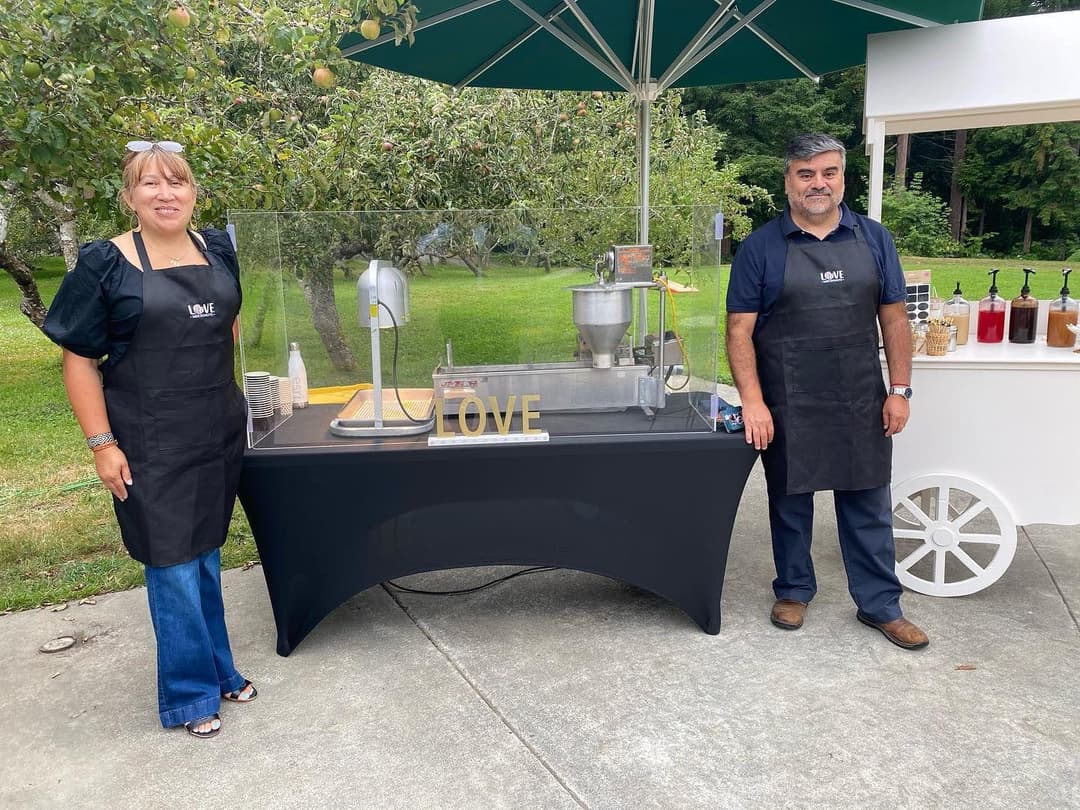
The r/foodtrucks question "if you were starting over, tent or truck?" split the room, but the reasoning was consistent.
For the tent: "100% canopy. Far Lower barrier of entry and lower risk. Is a great way to market test your product." One vendor "started last year with a 10x20 popup tent because I was starting with absolutely nothing. I just became Business debt free this last weekend and I'm currently working on getting a trailer to upgrade my setup into."
For the trailer: "drive up, open doors, serve, close doors, drive off. no loading and unloading." And the weather argument cuts both ways; a trailer keeps you dry.
Our family has run from a tent for 15 years, and the pattern in these threads matches what we have seen: the vendors who start under a canopy learn which events are worth the drive before they have committed to a trailer and a tow vehicle.
Kettle corn has a reason to stay visible that other foods do not. "A good kettle corn is second to actually seeing the big 'production' being done with the kettle. Its more fun to watch a fun kettle corn guy than the taste matters really." An Oregon vendor solved it with a converted horse trailer and the kettle out front.
Whichever you choose: "Your vehicle, canopy and storage tubs should be organised exactly the same way every time so it's just muscle memory. I can set up in 15 minutes and load the van in 5 solo." Small events are a one-person job. "Large crowds will need 2 people, one in charge of cooking and one in charge of sales and distribution."
8. Where to sell kettle corn now
Live from the Vendorbound catalog
6,984 festivals, farmers markets, street fairs and more are taking vendor applications now
10,814 in the catalog. Where there are the most:
- Festivals in Florida510 open
- Farmers markets in California387 open
- Festivals in California330 open
- Festivals in Texas328 open
- Festivals in Georgia200 open
- Festivals in North Carolina189 open
When we wrote this guide in September 2026, 10 events in the catalog named kettle corn or popcorn; nine were in California and one in Texas. Across food vendors, the median listed booth fee was $145, 248 fee tiers were free, and 254 were a percentage of sales, most commonly 10%.
Frequently asked questions
How much does it cost to start a kettle corn business?
About $4,000 to $6,000 for a commercial kettle, canopy, and equipment to pop on site. About $10,000 with a trailer and first-year permits. A few hundred dollars to pop at home and sell sealed bags where your state's cottage food law allows it.
How much do kettle corn vendors make?
Reported days range from $200 in front of a store to $850 at a medium farmers market to $2,000 to $3,000 at a well-attended festival. Margins on product are about 90%; the real costs are the booth fee, fuel, insurance, and a 9 to 12 hour day.
Do I need a permit to sell kettle corn?
Yes, from your county health department, for every event where you pop on site. Propane also needs fire-department approval. Pre-bagged kettle corn may fall under your state's cottage food law instead.
What should I charge for kettle corn?
Vendors in 2026 charge $5 for a small bag, $8 to $11 for a large, and $12 to $17 at premium events. Flavored popcorn runs $1 more per size.
Should I accept an event that takes a percentage of sales?
For a low-ticket product like kettle corn, often yes. You owe nothing if the event is slow, and the rate becomes a pricing input. Vendors who take 20 to 35% events raise prices to match and cut the menu for speed. Refuse flat fees you cannot expect to cover ten times over.
Is the kettle corn market saturated?
At established events, usually. Call organizers, ask whether they have a kettle corn vendor, and offer to be the backup. Expect to drive further for open slots.